
NASA's Hubble Studies Star Ocean in Preparation for Roman Mission
NASA has released images of a densely packed star region around the Milky Way's center. The observations will help compare data with future observations from the Roman telescope and search for exoplanets.
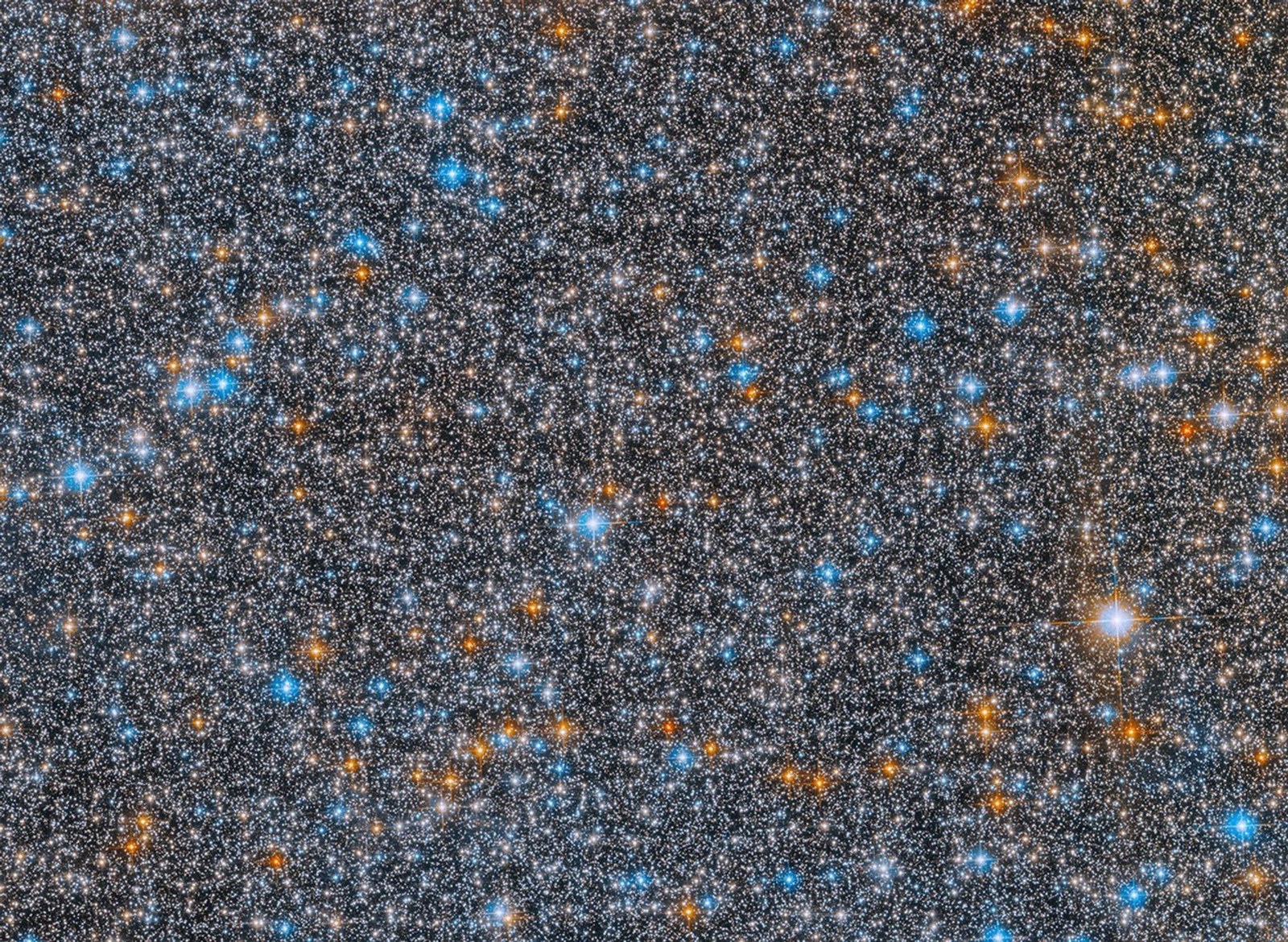
NASA has published images of the Milky Way's central bulge, where stars are particularly densely packed. This region contains nearly a quarter of the galaxy's stellar mass, and its proximity allows for the study of individual stars with high precision.
Hubble observed the area in the red part of the visible spectrum and the near-infrared range—these overlap with the sensitivity ranges of the future Nancy Grace Roman Space Telescope. Researchers will be able to compare data from the two observatories to more accurately determine the brightness, age, composition, and motion of stars.
One of Roman's tasks is the search for exoplanets using microlensing. During such an event, the gravity of a nearby star distorts and amplifies the light of a more distant object. Hubble's observations will help describe the stars in this region in advance and then match their characteristics with event data.
The new images complement Hubble's previous programs, including a study of 180,000 stars in the central bulge. The observations were carried out as part of Program No. 17776, dedicated to the search for exoplanets, black holes, and neutron stars.